
Tomorrow is March 17: St.
Patrick’s Day. A day held sacred mostly by raucous Americans who see
the day as nothing more than an excuse to kiss random people, dress
in lurid shades of green and drink as much beer as humanly possible
while parading wildly in the streets. But who was St. Patrick? And
why have a day in his honour?
Patrick
– although it’s very likely that his real name was actually
Maewyn Succat and Patrick was a name adopted much later – began his life
as a
pagan. He was born sometime around 387 A.D. in
either Scotland or Wales. This is an educated guess, of course. The
exact dates and
location were swallowed up by time – and the Irish love of exaggerated
(but not necessary accurate) story-telling. Much of what remains of St.
Patrick’s life and death is a combination of myth and conjecture – but
here it is, such as it is:

Patrick
was about sixteen when he was stolen from his home by a band of Irish
outlaws and sold into slavery. He spent the next six years under the
control of a master known as Milchu whom history remembers as a Druid
High Priest. Milchu taught Patrick the ways of the Druids and the
young man learned to speak Irish Gaelic fluently during his period of
captivity.
It’s
easy to imagine a frightened 16-year-old boy growing to hate his gods
for such a fate. Your gods have let you down, torn you from your home
and delivered you into the hands of people you consider barbaric
because of their treatment of you – people who hold similar beliefs to
your own. So who do you turn to? Well, the first new god that comes
along, of course!
When
Patrick made his escape after six years of slavery, he made his way
into the land of Gaul (now France) where Christianity was widely
worshiped. Patrick, studying under St. Germain who was then a Bishop,
embraced the Christian god as his saviour. Historians say that he
spent nearly twenty years under Germain’s tutalige. He first became a
monk then was later promoted to priesthood before being sent – with St.
Germain – back to Britain to convert the natives.
I
don’t find it surprising that Patrick would arrive back in the land of
his captivity with a passion to eradicate everything that reminded him
of
his time of slavery. He was, after all, obviously scarred at an early
age. I don’t condone it either, however. I accept that Hitler had a
disturbed cildhood, which possibly lead to some of the
resentment-driven decisions he made later in life. But he was still a
“mass murdering fuckhead” (thank you, Eddie Izzard, for
that one) – if you catch my drift.
Some
might take offense to my suggestion that St. Patrick was nothing more
than a common-place murderer. However, that decision was made by
history, not myself – I simply present it to you in the most direct way
possible. Because Patrick spoke their language and could twist
the facts he knew of their pagan beliefs, he was able manipulate many
of the locals into converting. The rest? Well, the rest he converted
to Christianity the old fashioned way: by the blade.
Legends
say that St. Patrick arrived in Ireland like a hero, driving all the
evil, nasty snakes away. Fact says that there weren’t any snakes
native to Ireland at that time in history. The word “snake” has always
been a euphemism for pagan. Most pagan religions honour snakes as
symbols of eternity, most Christians see them as evil creatures
(Garden of Eden, etc.) so it’s not that hard to work out the correlation.
 While
While
the rest of their neighbours and friends are dressing up in green, as
leprechauns and the like, modern-day pagans are pinning a simple
snake pin to their chest as a silent protest of St. Patrick’s bloody
sweep across the Emerald Isle. Many will not even adorn their bodies
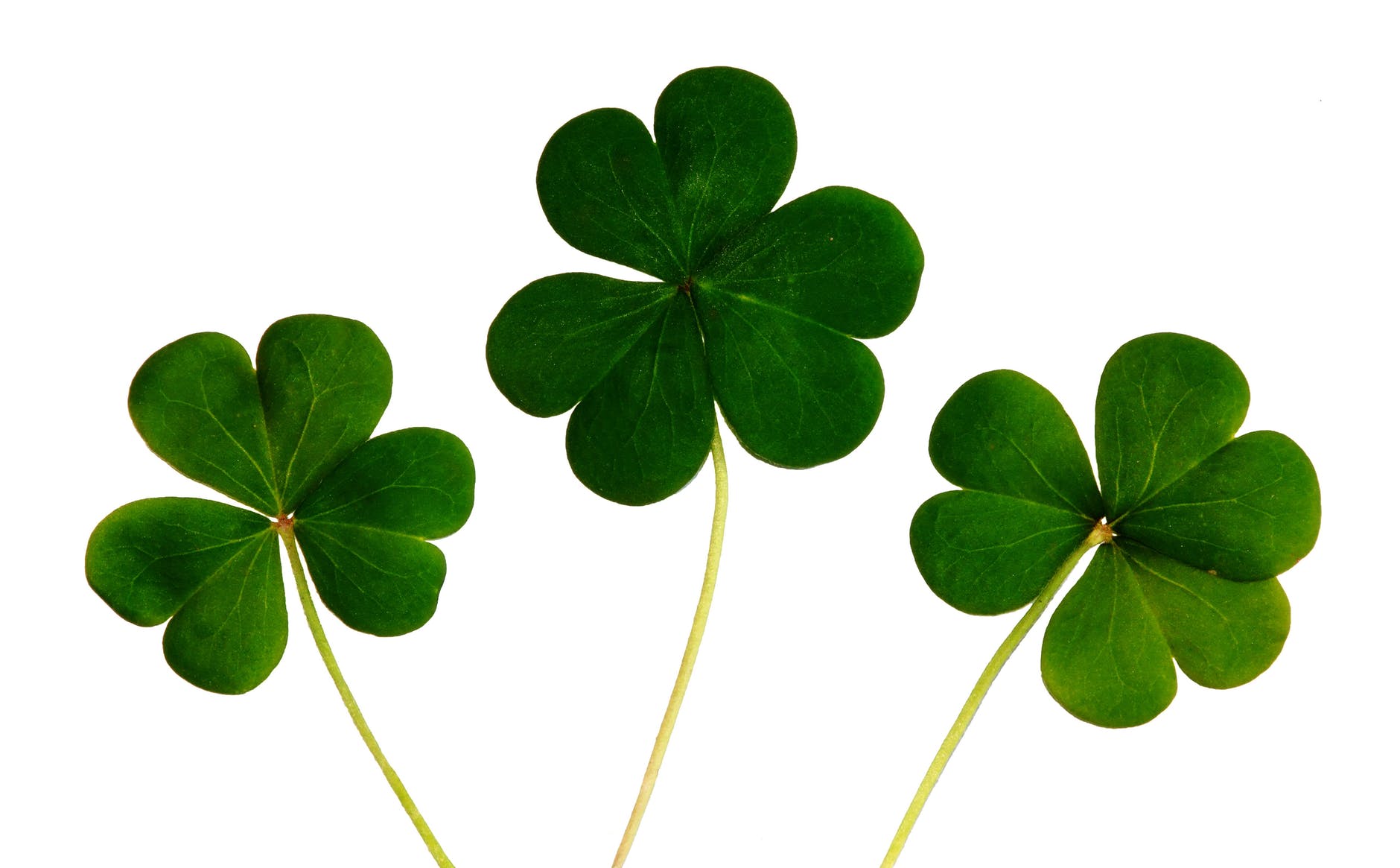
with the three leaf clover (or shamrock) that is so popular on this
day, believing it to be his symbol. (It is said that Patrick would
often wear a shamrock on his person, believing the three leaves to be
a symbol of the holy trinity: the father, the son and the holy
ghost.)
On
a personal level, St. Patrick’s Day just pisses me off. Think about
it. We don’t hold St. Hitler’s Day to celebrate the eradication of
the Jews, right? So why celebrate St. Patrick’s Day to honour of the
elimination of a religion and, indeed, an entire way of life?
Also See:
https://suite101.com/a/maewyn-succat-the-real-saint-patrick-a207081